
If you’ve never ridden in a wheelchair van or on a stretcher, it’s normal to wonder how it all works. How does the chair get in? What keeps it from moving? Will I be sitting in my chair the whole time?
This post walks through what’s inside our vehicles and what happens from the curb to the destination. We’ve added photos so you can see it for yourself.
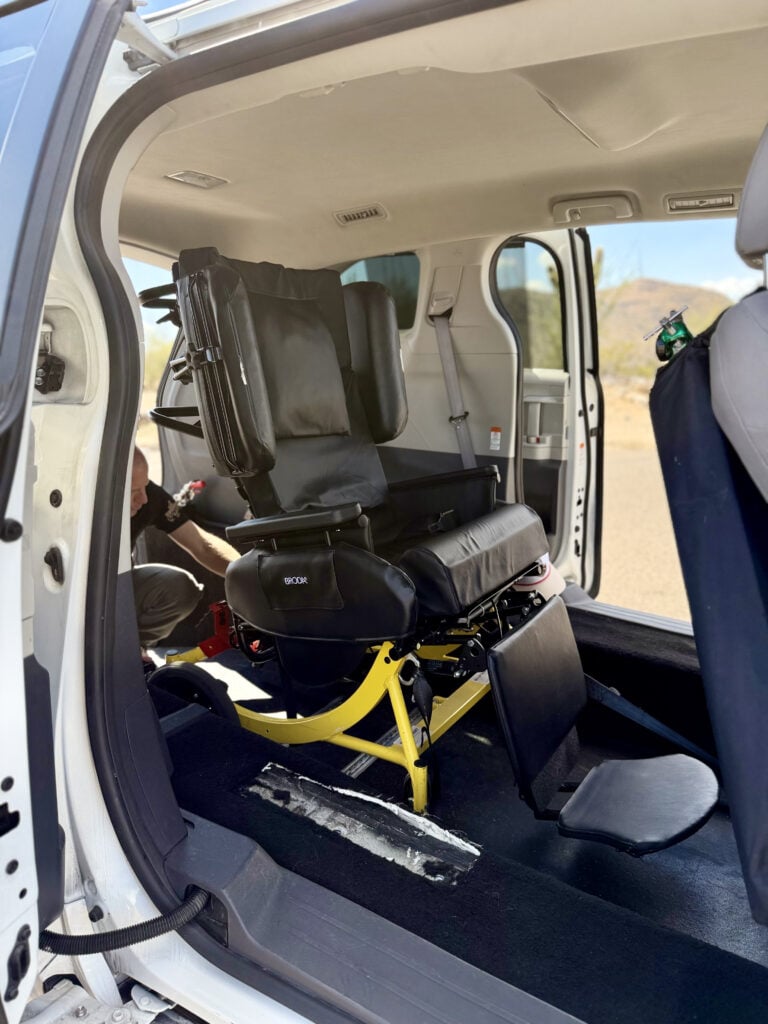
The wheelchair lift
Our wheelchair vans use a powered platform lift. The driver lowers it to the ground, the rider rolls on, and the platform raises level with the floor of the van. There’s no ramp to push up and no need to transfer out of the chair.
The platform has handrails on the sides and a safety barrier at the outer edge that comes up while the lift is moving. The driver runs the controls and stays with the rider for the full cycle.
If you use a power chair, tell us the make and model when you book, or just the approximate size and weight. Most standard power chairs fit without any trouble. For larger chairs, we’ll confirm the vehicle ahead of time.
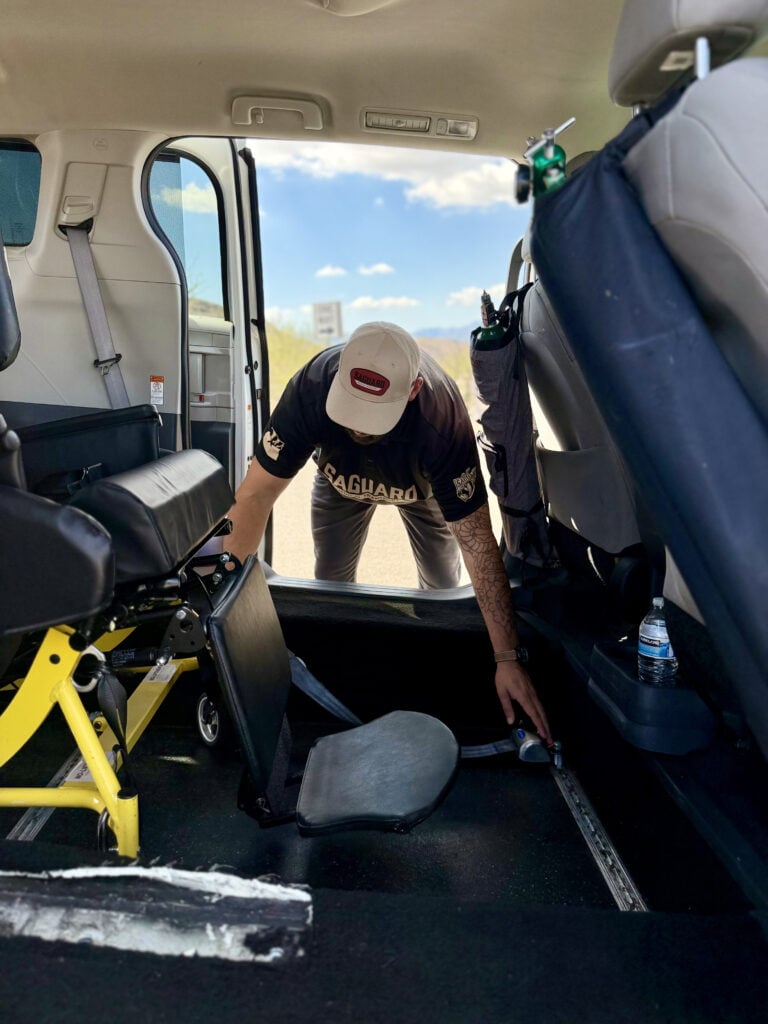
Four-point tie-downs
Once inside, the wheelchair gets secured to the floor at four points: two straps in front and two in back. Each strap hooks to the frame of the chair and locks into a track in the floor. When they’re tightened, the chair doesn’t roll or shift, even on stops and turns.
The driver checks each strap before the van moves.
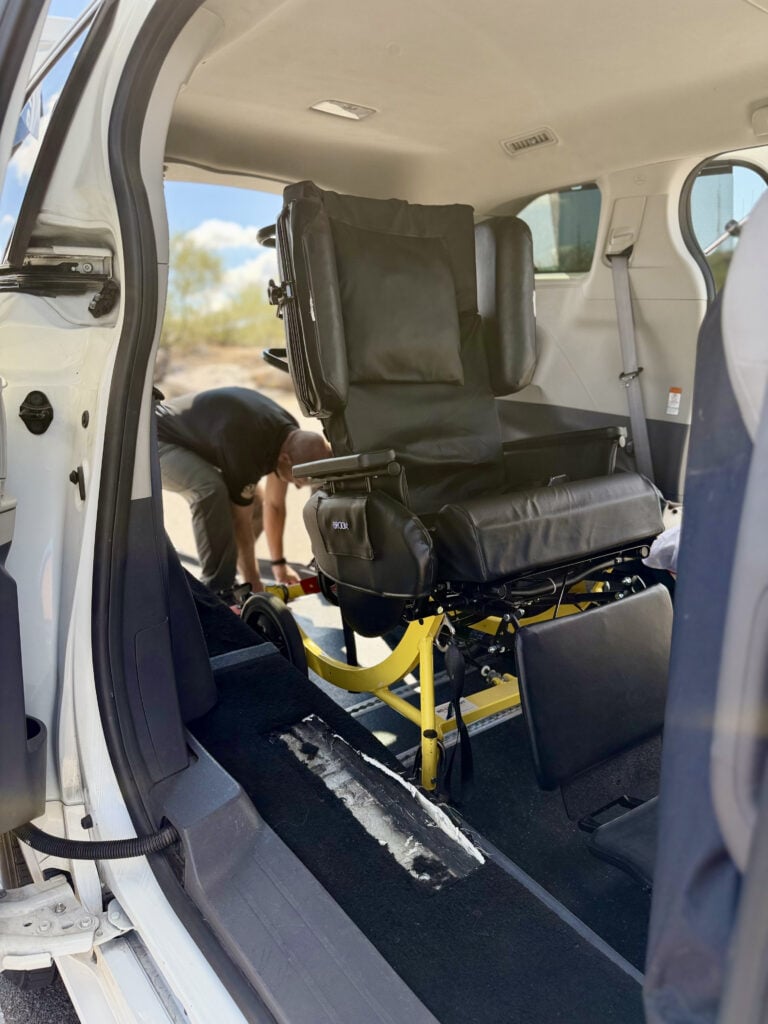
Your own seatbelt, separate from the chair
This part surprises some people. The straps that hold the wheelchair down are not what keeps the rider safe. That’s a separate lap belt and shoulder belt that goes across the rider, the same idea as a regular car seatbelt. Securing the chair and belting the rider are two different steps, and we do both every time.
Scooters
Mobility scooters are built differently from wheelchairs and don’t always have solid points to secure. Depending on the scooter, we may ask the rider to move to a vehicle seat for the trip while the scooter is secured separately. If you use a scooter, mention it when you book so we can plan ahead.
Stretcher transport
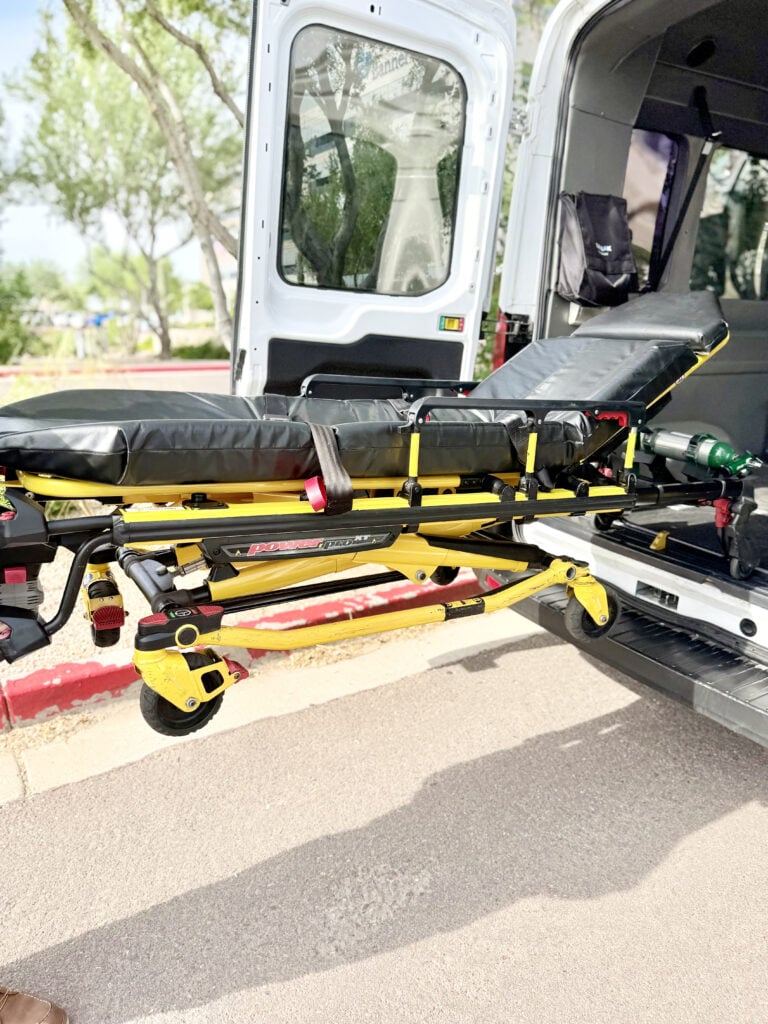
For patients who need to lie flat, we use a cushioned stretcher (also called a gurney) that locks into a mount on the vehicle floor. The patient is secured to the stretcher with straps across the body, and the head of the stretcher can usually be raised a bit for comfort if the patient’s orders allow it.
Stretcher rides have an attendant with the patient, and we bring the stretcher to the bedside for pickup at home, a hospital room or a nursing facility. You can read more on our stretcher transport page.
Climate control
In the Valley, this matters as much as any piece of equipment. Our vehicles are cooled before pickup, and drivers keep the lift time outdoors as short as possible during the hot months. In winter, the heat works just as well for early morning rides.
Keeping it clean
Every vehicle gets wiped down between riders: seats, belts, buckles, rails and the lift controls. It’s a small thing, and it’s part of our standard for every ride.
Questions before your first ride?
If you or someone you care for is nervous about a first wheelchair or stretcher ride, call us at (480) 857-5906. We’re happy to explain anything ahead of time. When you’re ready, book online or learn more about our wheelchair transport service.

