
People usually meet our drivers for about fifteen minutes. A knock on the door, a ride across town, a hand getting out of the vehicle. There’s a lot more to the job than that, and most of it happens before anyone rides.
Here’s what a typical day looks like for a Saguaro driver in Phoenix.
Before the first pickup
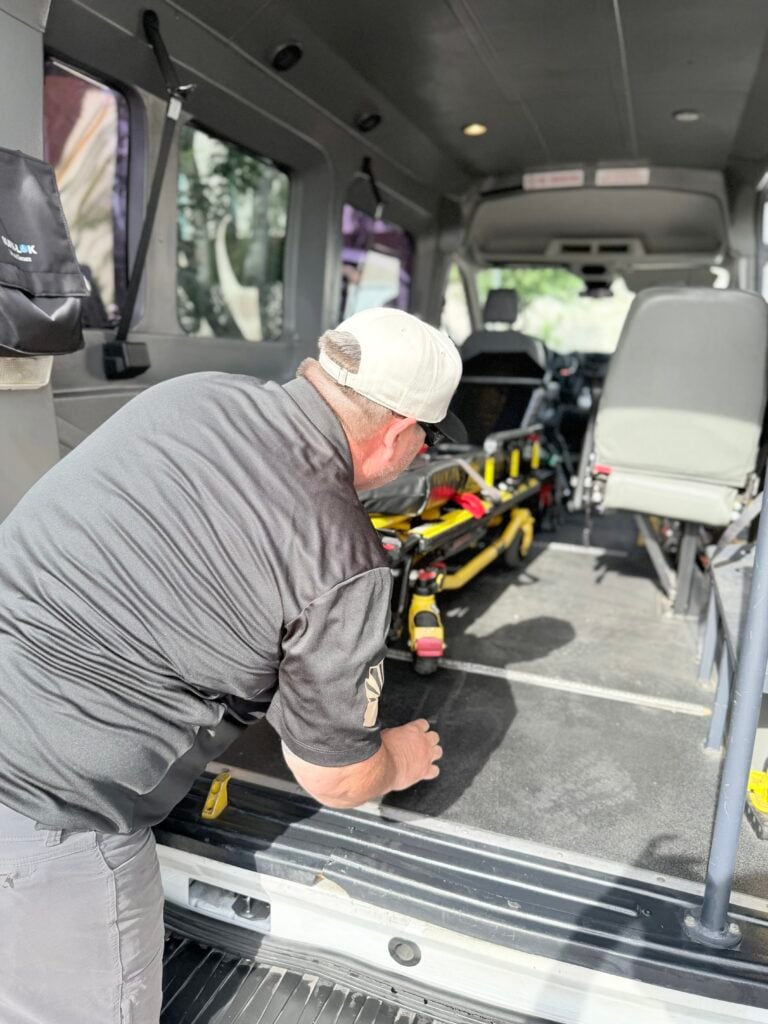
The day starts with the vehicle, not the schedule. Drivers walk around the van and check tires, lights and mirrors. On wheelchair vans they run the lift through a full cycle, up and down, and make sure every tie-down strap and belt is where it should be. On stretcher units they check the mounts and the straps on the gurney.
In Phoenix, the air conditioning gets checked every single morning. A vehicle that’s comfortable at 7 a.m. has to stay comfortable at 3 p.m. in late September when it’s still over 100 degrees outside.
Then the interior gets wiped down: seats, handrails, belt buckles, door handles.
Reading the schedule
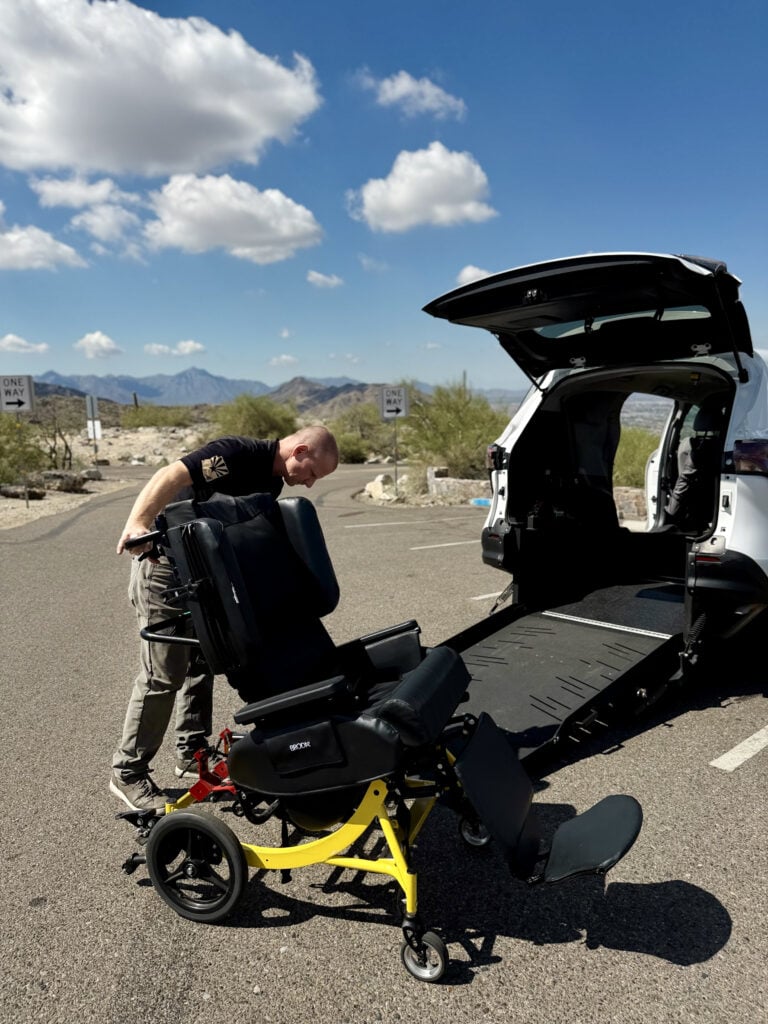
Next comes the day’s run sheet. Each ride lists the pickup address, destination, appointment time and what kind of ride it is: ambulatory, wheelchair, stretcher or bariatric. Drivers look for anything that will affect timing, like a dialysis patient who needs to be in the chair by a set time, or a hospital discharge that could shift by an hour.
They also look at the notes. “Uses a walker, three steps at front door.” “Gate code 4412.” “Daughter will meet at the clinic.” Those small details make the difference between a smooth pickup and ten minutes on the phone.
The first pickup
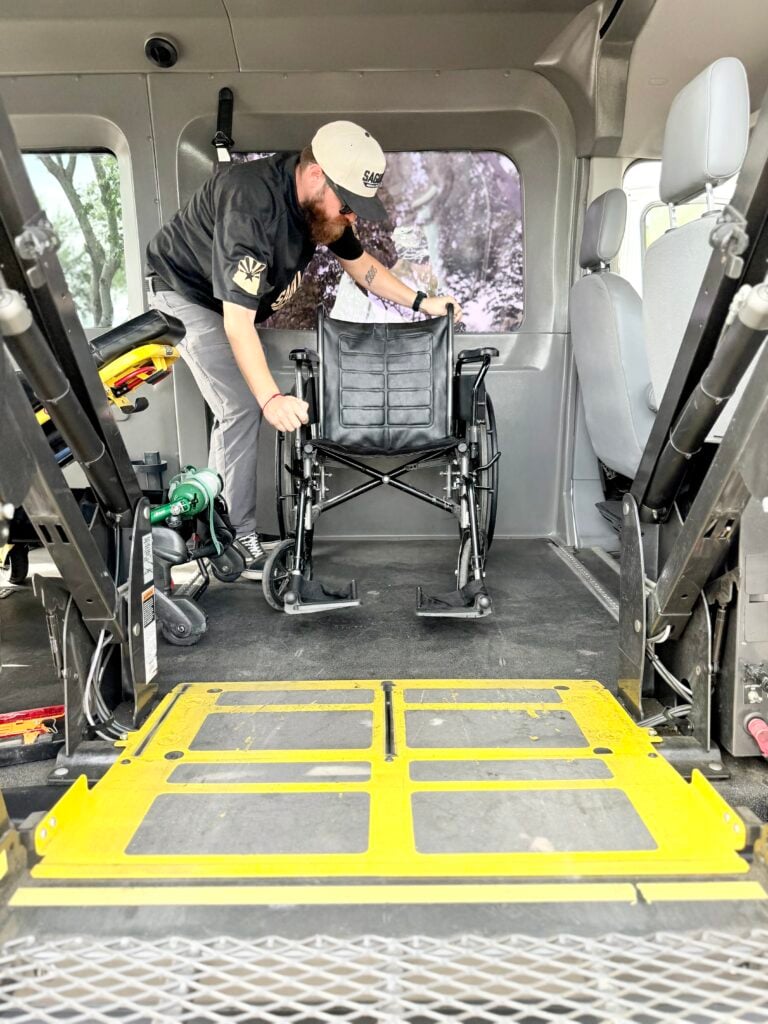
A good pickup starts with a phone call a few minutes out so nobody is rushed. At the door, the driver confirms who they’re picking up and where they’re going. For riders who walk, that might mean an arm to lean on and a hand with the step into the van. For wheelchair riders, it means rolling onto the lift, securing the chair at four points, and then putting on the rider’s own lap and shoulder belt.
Drivers don’t hurry this part. Getting someone settled correctly takes a few extra minutes, and it’s the part riders remember.
On the road
The Valley is big. A single morning might include a run from Tempe to north Phoenix, then back down to Mesa. Drivers plan around the usual slow spots on I-10 and the 202 and give themselves room for traffic. Nobody wants to show up late to a cardiology appointment because of a backup at the Mill Avenue exit.
Some riders like to chat. Others want a quiet ride and the radio off. Drivers read the room.
At the destination
Drop-off means getting the rider all the way to where they need to be. At a big hospital campus, that can be a long walk or roll from the entrance to the right department. Drivers will help riders get checked in when they need it and make sure the front desk knows how to reach us for the return trip.
For facility patients, there’s usually a handoff: a quick word with the nurse or the front desk and any paperwork that came along for the ride.
The afternoon
Afternoons bring return trips, which are harder to predict. A procedure runs long, a doctor gets behind, a discharge waits on one last signature. Our dispatcher and drivers stay in contact all day so rides get shuffled when appointments move.
End of the day
The last drop-off doesn’t end the shift. The vehicle gets cleaned again, fuel gets topped off, and anything that needs attention gets reported so it’s fixed before the next morning.
The people behind the wheel
Every one of our drivers goes through training before they drive for us, and most of what they learn is about people, not roads. You can read more about why that matters in our post on trained NEMT drivers.
If you think you’d be good at this work, we’re often hiring. Take a look at our driver hiring page.
Need a ride? Call (480) 857-5906 or book online.


